
My good friend and colleague, Poonam Gupta invited myself and Joanne Stone to an Agile Meetup at CIBC to kick off 2025.
The theme for the meetup was:
“Is Agile Truly Dead?”
It’s not the first time I’ve heard this question.
In fact, rumours of its death started as far back as 2014 when Dave Thomas asserted as much in a blog post, Agile Is Dead (Long Live Agility) – over 10 years ago!
He followed it up with a keynote session at the 2015 GOTO Conference in Amsterdam.
I blogged about the very same question myself 5 years ago.
So, Agile has been dying a slow death since at least 2014.
However, 11 years later the question has become much more relevant given the rise of troubling socio-economic trends globally:
- The job market for agile practitioners was been on life support starting in 2024. With some people out of Agile work for ~12 months.
- The demand for Agile training services declined significantly in 2024. In some cases down by 85%-95%.
- The use of Agile ways has evolved from a novel oddity to a hackneyed commodity.
- The coopetition between traditional Project Management and Agile as evidenced by the recent partnership between the Agile Alliance and PMI threatens to water down Agile’s human-centric roots with an emphasis on process.
- The infatuation with generative AI further threatens Agile’s (real) people first human-centric roots.
- The scale and impact of global warfare has replaced “Will our company survive?” to “Will our country and the world survive?”
So, is Agile truly dead?
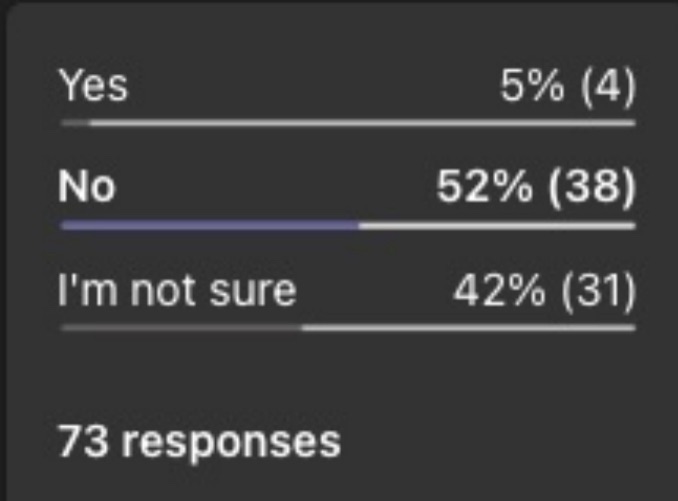
- 5% of the CIBC Agile meetup participants responded YES
- 52% of the CIBC Agile meetup participants responded NO
- 42% of the CIBC Agile meetup participants responded I’M NOT SURE
The most pressing concerns expressed by the audience were:
- Waterfall is still the default
- Job security
Waterfall is still the default.
In my experience, the reasons for this include:
Change doesn’t happen overnight for everyone.
Everett Rogers’ Diffusion of Innovations theory in 1962 proposed 5 different groups of adopters when it comes to the spread of new ideas (like Agile). Each group represents the speed with which members of the group are willing to adopt new ideas. From ‘overnight’ Innovators to ‘possibly never’ Laggards.
- Innovators
- Early Adopters
- Early Majority
- Late Majority
- Laggards
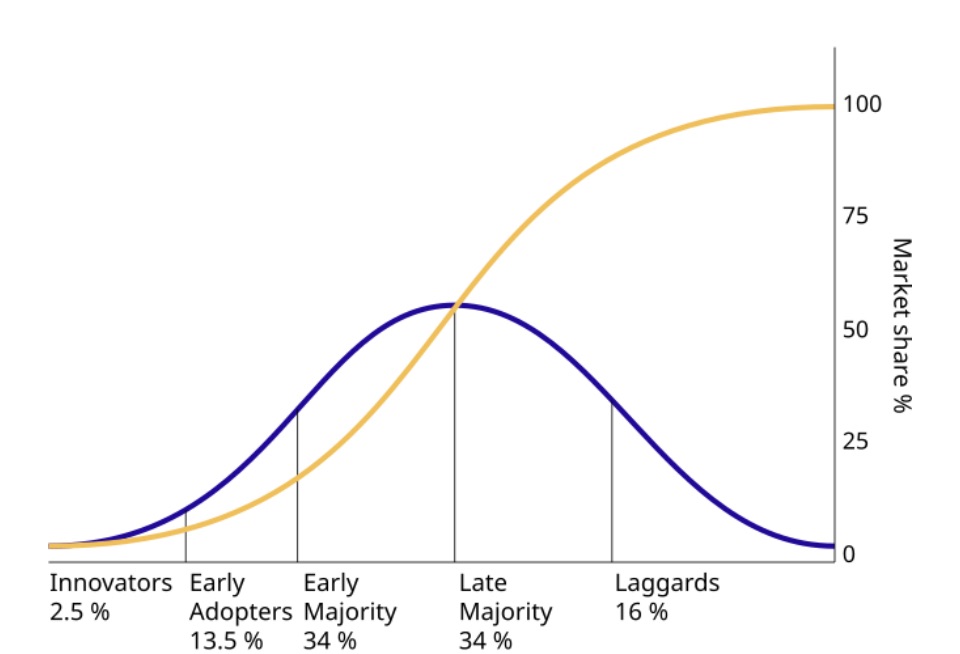
The Waterfall model of software development still being the default could be a symptom of being slow or very slow in adopting Agile ways.
The rate determining step may be based on the how much momentum exists for the status quo and the benefits that come with change.
The more momentum, the more resistance.
The more resistance, the slower the willingness to change.
And, if the benefits are meagre at best, why change?
Which brings me to the second reason why the old Waterfall still reigns supreme in many large organizations.
A failure to hone and improve the basic Agile practices.
“I fear not the man who has practiced 10,000 kicks once, but I fear the man who has practiced one kick 10,000 times.”
Bruce Lee
When it comes to Agile practices, I’ve seen so many instances of mechanical, going-through-the-motions use of Agile practices and patterns that result in
- A lack of understanding of why they’re doing the practice or using the pattern
- Suboptimal returns on implementing the practice due to that lack of understanding
Often, opportunities to continuously learn and improve on the basic practices go unheeded. Practices such as:
- Scrum Events
- Value Stream Mapping
- Story Mapping
- Story Writing
- Story Splitting
- Interpreting metrics like Burn Down Charts and Cycle Time
If you don’t really understand why you’re using Agile practices and aren’t seeing any benefit for using them then why would anyone pivot away from the Waterfall devil-they-know?
Job Security
Some of the Scrum Masters in the audience worried about what would happen to their chosen Scrum Master role.
It reminded me of a similar worry that traditional Project Managers had when their teams were starting to adopt Scrum. What I told them was:
“There may not be a role called Project Manager in the Scrum Guide, however there will always be a role for a person with your set of unique skills, capabilities and experiences.”
In other words, focus on you, the person and not you, the title.
If I were to leave the meetup audience with some parting words, here’s what they would be:
- Agile as ‘a thing’ may be dead. Agile as a way of thinking and working lives on in the spirit of the Agile Manifesto.
- Start with who & why. Who’s the customer and why do they need us?
- Go back to basics. There are no experts here. Be a craftsman who continuously improves on their practices no matter how basic they may seem.
- Focus on capabilities not titles. Focus on you, the person with a unique set of skills and experiences. Titles come and go. What you can contribute will only get better over time.
- Be patient. Wait for it… People and regimes come and go. Faster, higher quality and lower cost never go out of style. Whether it’s replacing Waterfall or adopting Lean UX, resistance will wane and wear down over time like a rock in a flowing stream if the benefits of changing such as faster cycle time, lower cost, or increased customer satisfaction come into focus and become undeniable. Anything else will become a nonstarter for change. If you can’t demonstrate the benefits then perhaps change is unnecessary.
“People don’t resist change.They resist being changed!”
Peter Serge
…. Until there’s a good enough reason for them.

 Next Chapter Consulting